What Is the Best Response Time for Mortgage Lead Buyers?

Last Updated: November 13, 2026
Quick Summary
A workable response time for a mortgage lead buyer is under five minutes, and faster first contact generally improves conversion. Shared leads warrant contact under two minutes, while aged leads can wait for same-business-day outreach followed by a cadence.
- Response time is not delivery time; a transfer can land in seconds and sit untouched.
- Exclusive live transfers should be answered within 180 seconds because the prospect is on the line.
- Automated routing wins on speed and consistency, while manual routing wins on judgment for small teams.
- Measure response time from assignment to buyer, reporting median and 90th percentile rather than the average.
- Any lead uncontacted in the first hour should be reassigned and reviewed at a daily standup.
Table of Contents
- Why Mortgage Lead Buyer Response Time Decides Conversion
- Mortgage Live Transfer Qualification Criteria and the 180-Second Buffer
- Mortgage Lead Routing Software: Automated vs. Manual Assignment
- Mortgage Lead Follow-Up Scripts for the First Hour and Beyond
- Mortgage Prospect Data Freshness and Follow-Up Cadence
- Buy Exclusive Live Mortgage Leads Transfers
- Frequently Asked Questions
Why Mortgage Lead Buyer Response Time Decides Conversion
A workable response time for a mortgage lead buyer is under five minutes, and faster first contact generally improves conversion. Speed is the one variable a mortgage lead buyer fully controls after purchase, and it changes outcomes more than script wording or CRM features.
Response time is not delivery time. A transfer can land in your queue in seconds and sit untouched for twenty minutes, and slow first contact can undermine results regardless of lead quality.
Below, we break down benchmarks by lead type, a practical response SLA, routing decisions, and the first-hour workflow that turns a purchased lead into a conversation.
How Speed to Lead Changes the Conversation
A prospect who just submitted an inquiry is in a narrow window of attention. Call in the first two minutes and you reach a person still holding their phone.
The conversation shifts too. Fast contact lets you ask about timeline, loan product, and property without re-establishing why you are calling; slow contact forces you to restart interest from scratch.
Consumer Financial Protection Bureau guidance on mortgage servicing and consumer contact reinforces a basic point: the consumer experience of being contacted matters, and it should be handled with clear records and respectful timing.
Response Time Benchmarks by Lead Type
Different lead types carry different clocks. A live transfer is a person waiting on the line. An aged record is a colder start. Treating them identically wastes both.
| Lead Type | Practical Response Target | Why |
|---|---|---|
| Exclusive live transfer | Answer within 180 seconds | Prospect is on the line now |
| Real-time exclusive lead record | First contact under 5 minutes | Attention is highest immediately |
| Shared lead | Under 2 minutes | Several buyers receive it at once |
| Aged lead | Same business day, then cadence | Intent has cooled; persistence matters |
| Prospect data list | Scheduled outreach sequence | No live inquiry to answer |
The 180-second figure is the approved live-transfer evaluation buffer for LiveMortgageLeads4U campaigns, not a universal rule. Confirm the applicable acceptance terms for your campaign before you build staffing around it.
Mortgage Live Transfer Qualification Criteria and the 180-Second Buffer
Qualification criteria define what counts as an acceptable transfer, and buyers should agree on them in writing before the first call.
The 180-second buffer gives the receiving team time to accept and greet the prospect. This guide to measuring mortgage live transfer call speed shows how to benchmark your own response time.
Paying for transfers that never met your stated criteria is a common money leak in this category. Ask how rejected or invalid transfers are handled, and get the answer in writing.
Mortgage Lead Routing Software: Automated vs. Manual Assignment
Routing software assigns each inbound lead to a loan officer by rule: state licensing, loan product specialty, language, or round-robin rotation. Manual assignment routes by hand, usually from a shared inbox or spreadsheet.
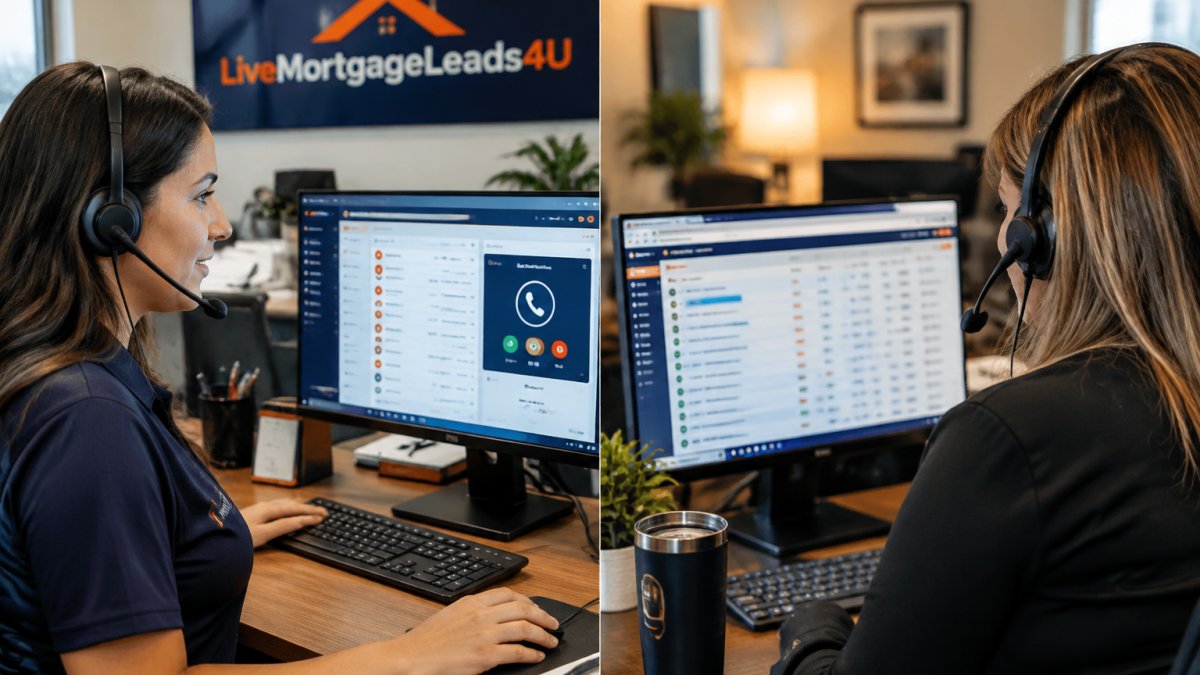
Automated routing wins on speed and consistency. Manual routing wins on judgment and cost for very small teams.
- Automated pros: instant assignment, even distribution, after-hours coverage, clean audit trail
- Automated cons: setup effort, rules that misfire on edge cases, monthly cost
- Manual pros: no software spend, a human reads every lead, easy to start
(/improve-mortgage-live-transfer-conversions/) pairs well with routing decisions.
Mortgage Lead Follow-Up Scripts for the First Hour and Beyond
A follow-up script is a short, structured opening that confirms identity, references the inquiry, and asks one qualifying question. The script matters less than the sequence around it: a defined first-hour workflow with retries and an escalation owner outperforms a better-worded opener delivered once.
Check Exclusive Lead Availability in Your Target States
Connect with pre-screened borrowers actively seeking mortgage solutions in your licensed territory. High-intent, exclusive transfers delivered straight to your loan officers.
A Minute-by-Minute Workflow for the First Hour
This timeline assumes an exclusive live transfer or a real-time exclusive lead record.
| Minute | Action | Owner |
|---|---|---|
| 0 | Lead lands; routing rule assigns it; response clock starts at assignment, not at vendor delivery | Routing software |
| 0-2 | First call using the opener below; log the attempt and outcome | Assigned loan officer |
| 2-3 | If no answer, leave a short voicemail and send the text message | Assigned loan officer |
| 5 | Second call attempt from the same number the prospect will recognize | Assigned loan officer |
| 10 | Send the email touch with a clear reply ask | Assigned loan officer |
| 15 | If still no contact, escalate to the backup owner or on-call queue | Team lead |
| 30 | Third call attempt; vary time of day on later attempts | Backup owner |
| 60 | Log the lead as uncontacted and move it into the nurture cadence | CRM |
Minute 0-2, call script opener:
“Hi [Name], this is [Your Name] with [Company].
Minute 2-3, voicemail and text:
Voicemail: “Hi [Name], [Your Name] from [Company].
Minute 10, email:
Subject: Your mortgage inquiry
“Hi [Name], thanks for reaching out.
Minute 30 and beyond: a cadence of calls and messages across the next several days beats one long voicemail.
When the Lead Arrives After Hours
A lead that lands at 9 p.m. still has a clock. Decide in advance whether your team answers live transfers after hours, routes them to an on-call loan officer, or holds them for next-business-day contact, and make the workflow explicit:
- Live transfers after hours: if no one can answer within the transfer window, the transfer should fail cleanly rather than sit in a queue.
- Lead records after hours: send an immediate acknowledgment text or email that sets an expectation for the next contact, then place the lead at the top of the next morning’s queue.
- Missed-lead recovery: any lead that goes uncontacted in the first hour should be reassigned, not left with the original owner, and reviewed at a daily standup.
Watch out: an after-hours auto-reply that promises a callback the team cannot keep damages trust more than a simple acknowledgment that names a realistic window.
Measuring Response Time and Attribution
Define when the clock starts before you report on it. A common pattern is to measure from the moment the lead is assigned to a buyer, separate from vendor delivery time, and to track both. Report the median and 90th percentile rather than the average, because a handful of slow responses can hide behind a healthy mean.
Our frequently asked questions cover delivery, lead quality, and how transfers work when you are planning that sequence.
Mortgage Prospect Data Freshness and Follow-Up Cadence
Prospect data freshness describes how recently a record was sourced, verified, and last active. Fresh data reaches people closer to their actual inquiry. Stale data reaches people who may have moved on months ago.
Ask three questions before buying any list:
- When was this record sourced and last verified?
- What consent and source documentation comes with it?
- Which marketing uses are permitted, and what suppression rules apply?
For live transfers, the equivalent questions concern screening and acceptance. Our guide to questions to ask a mortgage leads company walks through consent records, exclusivity terms, and pricing models.
Buy Exclusive Live Mortgage Leads Transfers
Response time only pays off when the lead behind it is real, exclusive, and matched to your criteria. Pricing and availability are on our service options page, and you can register as a professional lead buyer to get started.
Speed to lead is a staffing and routing decision before it is a script decision. LiveMortgageLeads4U provides exclusive live transfers, a ping-post system for custom filtering, and transparent reporting so you can measure accepted transfers, contact rates, and cost per funded loan rather than cost per lead.
Frequently Asked Questions
What is a good response-time target for an exclusive mortgage live transfer?
Treat the transfer as a live conversation, not a callback. LiveMortgageLeads4U uses a 180-second evaluation buffer for approved live transfers, so the buyer’s team should be ready to accept and greet the prospect within that window. Confirm the applicable acceptance terms for your campaign before you staff to it, and track accepted transfer rates alongside contact and appointment rates so the target reflects real performance rather than a hope.
How quickly should a mortgage lead buyer respond to a new lead record?
For purchased lead records and prospect data, aim to make first contact within five minutes during business hours and within the first hour after hours. Speed matters because intent fades fast, but so does accuracy: check mortgage prospect data freshness before dialing, and log every contact attempt so your response-time measurement reflects the true first touch rather than the first successful call.
How many follow-up attempts should buyers make after a mortgage lead does not answer?
Plan a cadence rather than a single call. A practical sequence is several attempts in the first 48 hours across call, text message, and email where consent allows, then spaced attempts over the following two weeks. Vary the time of day, leave a short voicemail on later attempts, and stop when the prospect opts out or the campaign’s permitted contact rules require it. Track contact rate by attempt number to see where the cadence earns its keep.
What should buyers check before accepting an exclusive mortgage live transfer?
Verify the lead source, consent documentation, exclusivity terms, and the screening script used before the call reaches you. Ask what counts as an accepted transfer, how rejected or invalid transfers are handled, and whether the prospect’s state and loan-product interest match your coverage. LiveMortgageLeads4U’s listed social proof includes TCPA and TrustedForm verification, and marketing screening is not underwriting or preapproval, so confirm the acceptance criteria in writing before scaling.

Get Live Transfer Mortgage Leads in Your Target States
Stop wasting hours chasing cold, recycled lists. Claim exclusive, high-intent borrower transfers delivered directly to your loan officers with a 100% contact guarantee.
More Mortgage Insights
View All Posts →